
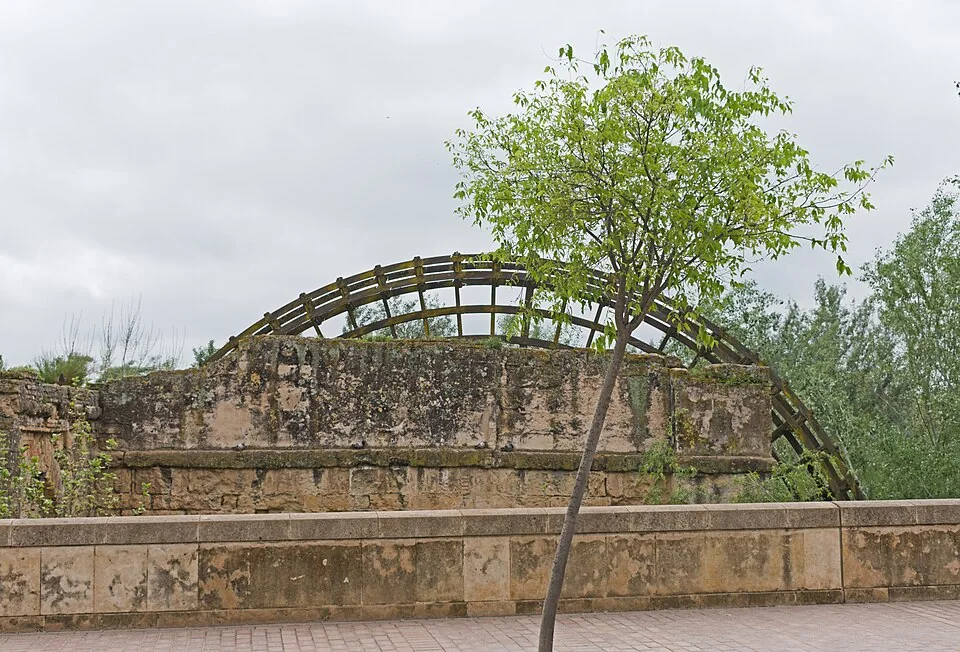
The Albolafia encourages you to see the Guadalquivir as a source of water and power as well as a landscape. Wheel and mill remains add another layer to the monumental riverfront. View the setting from the public promenade rather than descending towards the river.
History and origins
Official visitor information connects the hydraulic installation with lifting water towards the palace precinct. The wheel visible today was restored; it should not be described as an untouched medieval mechanism. The Guadalquivir mills passed through different building phases and uses.
What to look for
Distinguish the wheel from the mill structure and look at how both relate to the river’s level. A hydraulic installation makes more sense in its waterside position than as a set of isolated walls. Changes in the river affect how the setting appears.
A detail worth knowing
The Albolafia belongs to Córdoba’s historic and heraldic imagery. It brings the history of work and water into a walk more often associated with the city’s great monuments.
Planning the visit
This stop is intended to be viewed from public riverside space. The mill’s map reference is not an invitation to enter the building or approach the water. Respect barriers and the natural setting. It is a different site from the Molino de Martos; their histories should not be confused.
Location and directions
Ribera junto al Puente Romano y la avenida del Alcázar
Approximate cartographic reference, not a guarantee of an open visitor entrance. Confirm the permitted approach on arrival.
How to get there ↗Sources and visitor information
Historical information is presented separately from current access arrangements. Consult the responsible visitor service for opening, tickets and any restrictions.