
What we know. These are not four independent World Heritage properties. The 1994 extension belongs to the inscription begun in 1984; the Fiesta of the Patios is recognised as intangible cultural heritage.
1984: begin with a monument
Visitors often hear about Córdoba’s four UNESCO recognitions. The phrase brings together four important moments, but they do not all describe the same kind of designation. Understanding the differences offers more than a collection of dates: it suggests how to explore the city at different scales and recognise what matters in each setting.
In 1984, the Mosque of Córdoba entered the World Heritage List. The building’s long history includes its creation as a great mosque and its continuing life as a cathedral. Those transformations belong to the monument visitors encounter today. Appreciating its architectural distinction also involves understanding its setting and respecting its present religious use.
1994: widen the frame
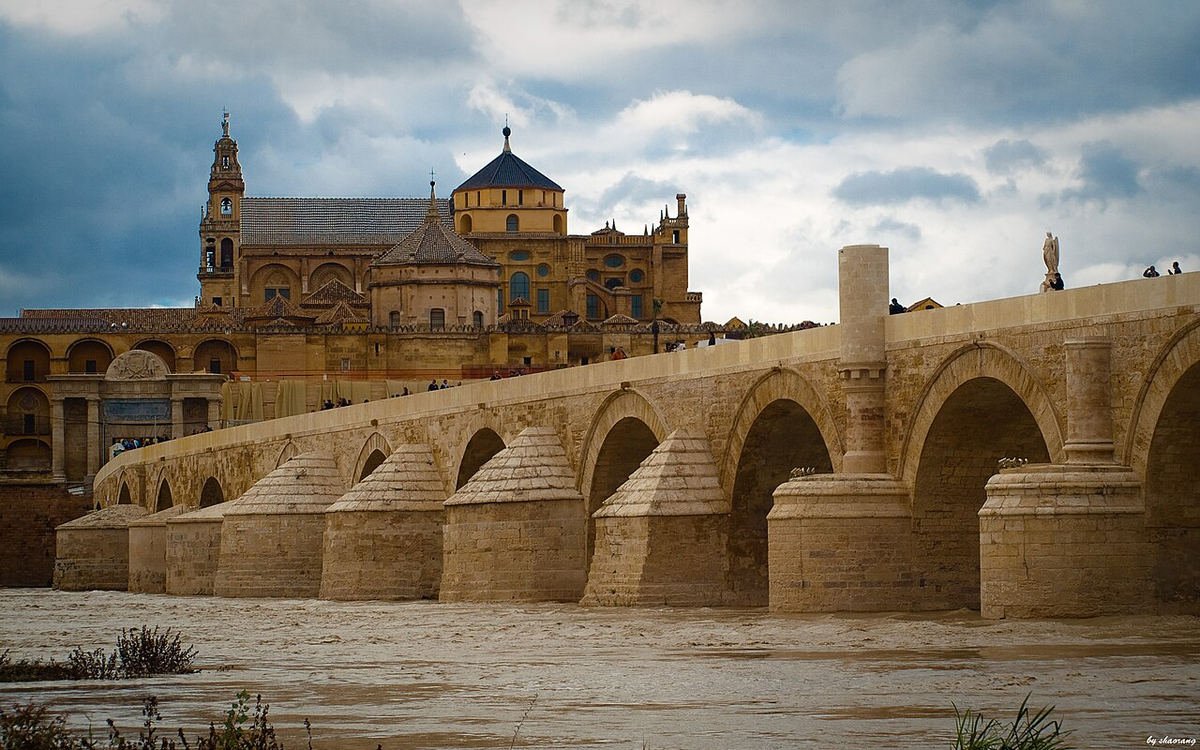
Ten years later the property was extended and renamed the Historic Centre of Cordoba. The enlarged area includes the Alcázar and reaches towards the Guadalquivir, the Roman Bridge and the Calahorra Tower. The year 1994 marks an extension of the existing property, rather than a second independent inscription for the Mosque.
From the bridge, that wider perspective becomes tangible. Buildings connect with streets, entrances, homes and the river landscape. Conserving an urban ensemble means attending to those relationships alongside its best-known monuments. The designation also has defined boundaries; it should not be taken to cover every part of the municipality.
2012: heritage that people practise
The Fiesta of the Patios received a different form of recognition in 2012, entering the Representative List of the Intangible Cultural Heritage of Humanity. Here, the emphasis includes people caring for a tradition, sharing it and passing on their knowledge. Flowers and courtyard houses provide its physical setting, while cooperation helps sustain the celebration.
This distinction changes how to visit. A courtyard house remains somebody’s home, and UNESCO inscription does not automatically make every patio open to the public. Following authorised visitor arrangements and respecting the people who welcome guests are ways of understanding heritage that depends on continuing work and participation.
2018: encounter an archaeological city
In 2018, the Caliphate City of Medina Azahara joined the World Heritage List. Its remains reveal an urban organisation of buildings, routes and infrastructure. Visiting takes the story beyond the old town towards the foothills of Sierra Morena, requiring a separate journey rather than another short stop on a city-centre walk.
Connect the four dates with four experiences: examine a monument, explore its urban context, learn about a shared practice and read an archaeological city. The familiar tourism phrase celebrates four milestones. The official records distinguish two World Heritage properties and one tradition on the intangible heritage list. That precision adds meaning to the journey without diminishing any of its highlights.
At your own pace
Audio guide
Córdoba’s four UNESCO milestones · 3:18 · English
Preparing player…
Read the full transcript
Córdoba’s four UNESCO milestones.
Visitors often hear about Córdoba’s four UNESCO recognitions. The phrase brings together four important moments, but they do not all describe the same kind of designation. Understanding the differences offers more than a collection of dates: it suggests how to explore the city at different scales and recognise what matters in each setting.
In nineteen eighty-four, the Mosque of Córdoba entered the World Heritage List. The building’s long history includes its creation as a great mosque and its continuing life as a cathedral. Those transformations belong to the monument visitors encounter today. Appreciating its architectural distinction also involves understanding its setting and respecting its present religious use.
Ten years later the property was extended and renamed the Historic Centre of Cordoba. The enlarged area includes the Alcázar and reaches towards the Guadalquivir, the Roman Bridge and the Calahorra Tower. The year nineteen ninety-four marks an extension of the existing property, rather than a second independent inscription for the Mosque.
From the bridge, that wider perspective becomes tangible. Buildings connect with streets, entrances, homes and the river landscape. Conserving an urban ensemble means attending to those relationships alongside its best-known monuments. The designation also has defined boundaries; it should not be taken to cover every part of the municipality.
The Fiesta of the Patios received a different form of recognition in twenty twelve, entering the Representative List of the Intangible Cultural Heritage of Humanity. Here, the emphasis includes people caring for a tradition, sharing it and passing on their knowledge. Flowers and courtyard houses provide its physical setting, while cooperation helps sustain the celebration.
This distinction changes how to visit. A courtyard house remains somebody’s home, and UNESCO inscription does not automatically make every patio open to the public. Following authorised visitor arrangements and respecting the people who welcome guests are ways of understanding heritage that depends on continuing work and participation.
In twenty eighteen, the Caliphate City of Medina Azahara joined the World Heritage List. Its remains reveal an urban organisation of buildings, routes and infrastructure. Visiting takes the story beyond the old town towards the foothills of Sierra Morena, requiring a separate journey rather than another short stop on a city-centre walk.
Connect the four dates with four experiences: examine a monument, explore its urban context, learn about a shared practice and read an archaeological city. The familiar tourism phrase celebrates four milestones. The official records distinguish two World Heritage properties and one tradition on the intangible heritage list. That precision adds meaning to the journey without diminishing any of its highlights.
Plan the visits individually: check admission to the Mosque-Cathedral, which patios receive visitors on your dates and the authorised routes at Medina Azahara. Streets and the bridge connect part of the story through public space. This page’s photograph shows the historic centre’s riverside setting; it does not depict all four milestones together.
Download for offline listening
Save this story before you leave. Its recording and page will be available in this browser. Maps, bookings and external links require a connection.
Locally generated neural narration · Emma · This story’s full script. Audio credits
What to notice and how to plan your visit
Plan the visits individually: check admission to the Mosque-Cathedral, which patios receive visitors on your dates and the authorised routes at Medina Azahara. Streets and the bridge connect part of the story through public space. This page’s photograph shows the historic centre’s riverside setting; it does not depict all four milestones together.
Sources and a critical reading
Documented evidence is distinguished from tradition and interpretation. Check current visitor arrangements. References are in Spanish unless marked English.