
What we know. The Cava story is a legend. Her supposed retreat to Pedroche, death in the well and subsequent apparitions are not presented as verified events.
A name holding a story
The Fuente de la Cava in Pedroche asks you to pause before something small. A place does not need a great surviving fortress to carry a powerful narrative. A name can bring together loss, refuge and a presence that returns. The useful question is not how to prove a ghost exists, but how a community connects its landscape with a tale that continues to circulate.
The version recorded by the Andalusian tourism service links the Cava with Florinda and the tradition of King Rodrigo and Count Julián. Following the Visigothic defeat, the woman is said to have sought refuge in Pedroche. The narrative places her beside a well, overcome by sorrow, and describes her throwing herself into it. This entire sequence belongs to legend.
An apparition within the tale
The tradition adds the return of a woman beside the water, whose gestures and laughter frighten those who encounter her. The well’s rim becomes a boundary between absence and presence. A tourism publication recording the account establishes that it is being told. It does not verify its supernatural scenes or identify reliable historical witnesses to them.
The setting offers an intimate scale for listening. Consider how a fountain changes in your imagination once you know the name attached to it. The real object remains while your attention takes in a story. This is a way of reading heritage, not an invitation to search for signs, drop objects into the well or disturb the site.
A conquest cannot be blamed on one woman
The wider Cava legend has been used to hold a woman responsible for an enormous political and military transformation. That explanation should not be repeated as established history. Nor is it necessary to endorse the insults and moral judgements found in some versions. The conquest beginning in AD 711 calls for different evidence and questions from those used to explore a popular tale.
Critical distance does not remove the story’s interest. It allows us to recognise its narrative devices: a private loss is used to explain a collective disaster, while the protagonist’s return prevents memory from reaching a conclusion. This is an interpretation of how the tale works, not a reconstruction of Florinda’s biography.
Beyond the well
Pedroche deserves a walk through its streets and heritage as well as this stop. The fountain can be a starting point for asking about other local places and the ways traditions are preserved. This guide does not promise admission to a building or an organised night visit. Current arrangements need to be checked locally.
Before continuing, separate three things: the place you can see, the tradition being told and the historical process to which it refers. Keeping them connected without confusing them gives Hidden Córdoba greater depth. It also suggests a comparison with Almedinilla’s Encantá, another story of water and return with a distinct local identity.
At your own pace
Audio guide
The Fuente de la Cava in Pedroche · 3:14 · English
Preparing player…
Read the full transcript
The Fuente de la Cava in Pedroche.
The Fuente de la Cava in Pedroche asks you to pause before something small. A place does not need a great surviving fortress to carry a powerful narrative. A name can bring together loss, refuge and a presence that returns. The useful question is not how to prove a ghost exists, but how a community connects its landscape with a tale that continues to circulate.
The version recorded by the Andalusian tourism service links the Cava with Florinda and the tradition of King Rodrigo and Count Julián. Following the Visigothic defeat, the woman is said to have sought refuge in Pedroche. The narrative places her beside a well, overcome by sorrow, and describes her throwing herself into it. This entire sequence belongs to legend.
The tradition adds the return of a woman beside the water, whose gestures and laughter frighten those who encounter her. The well’s rim becomes a boundary between absence and presence. A tourism publication recording the account establishes that it is being told. It does not verify its supernatural scenes or identify reliable historical witnesses to them.
The setting offers an intimate scale for listening. Consider how a fountain changes in your imagination once you know the name attached to it. The real object remains while your attention takes in a story. This is a way of reading heritage, not an invitation to search for signs, drop objects into the well or disturb the site.
The wider Cava legend has been used to hold a woman responsible for an enormous political and military transformation. That explanation should not be repeated as established history. Nor is it necessary to endorse the insults and moral judgements found in some versions. The conquest beginning in AD seven hundred and eleven calls for different evidence and questions from those used to explore a popular tale.
Critical distance does not remove the story’s interest. It allows us to recognise its narrative devices: a private loss is used to explain a collective disaster, while the protagonist’s return prevents memory from reaching a conclusion. This is an interpretation of how the tale works, not a reconstruction of Florinda’s biography.
Pedroche deserves a walk through its streets and heritage as well as this stop. The fountain can be a starting point for asking about other local places and the ways traditions are preserved. This guide does not promise admission to a building or an organised night visit. Current arrangements need to be checked locally.
Before continuing, separate three things: the place you can see, the tradition being told and the historical process to which it refers. Keeping them connected without confusing them gives Hidden Córdoba greater depth. It also suggests a comparison with Almedinilla’s Encantá, another story of water and return with a distinct local identity.
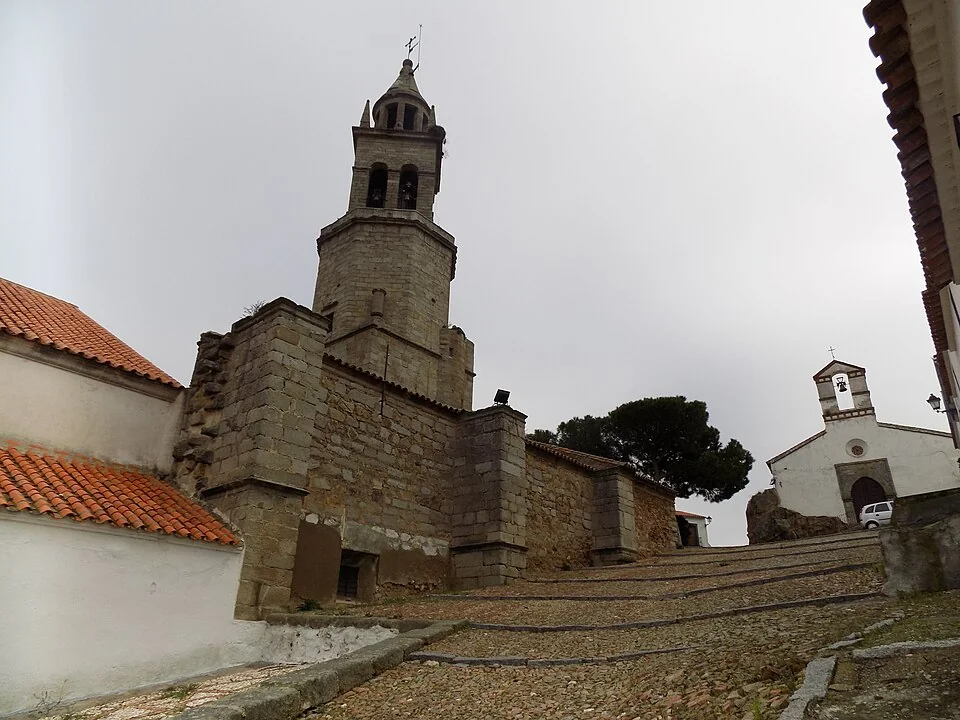
Pedroche is in Los Pedroches, north of Córdoba city. Confirm the fountain’s location and current access with the local council or tourist office. Listen from public space, without leaning into the well or entering private property. The photograph provides context through Pedroche’s monuments; it does not show the Fuente de la Cava.
Download for offline listening
Save this story before you leave. Its recording and page will be available in this browser. Maps, bookings and external links require a connection.
Locally generated neural narration · Emma · This story’s full script. Audio credits
What to notice and how to plan your visit
Pedroche is in Los Pedroches, north of Córdoba city. Confirm the fountain’s location and current access with the local council or tourist office. Listen from public space, without leaning into the well or entering private property. The photograph provides context through Pedroche’s monuments; it does not show the Fuente de la Cava.
Sources and a critical reading
Documented evidence is distinguished from tradition and interpretation. Check current visitor arrangements. References are in Spanish unless marked English.